
01
Handheld and voice hardware
Translators, recorders, AI earbuds, toys. A complete language model within a watt or two, working offline, on a battery that lasts all day.
Usually starts with Forge and the MaskROM route
The teams that come to us fall into six groups. Find the one closest to you and see which route and which chip it usually starts from.
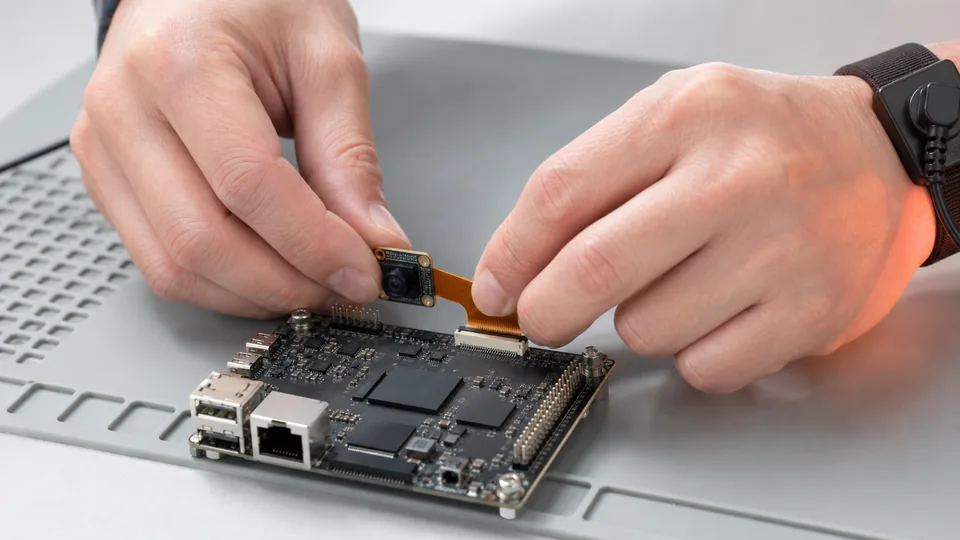
01
Translators, recorders, AI earbuds, toys. A complete language model within a watt or two, working offline, on a battery that lasts all day.
Usually starts with Forge and the MaskROM route
02
Cabin voice, embodied robots. A larger model running locally, with stable latency and no dependence on a connection.
Usually starts with Trident and near-memory compute
03
Defect segmentation on the line, drone inspection, multi-sensor fusion. Keeping up with every frame while the data stays on site.
Usually starts with Argus and SRAM compute-in-memory
04
Isolated networks in government, healthcare, energy and finance. Data must not leave the device, as a matter of architecture.
Every route runs locally; the model size picks the route
05
You have a chip, or are planning one, and want to add LLM inference without building an accelerator from scratch.
Usually starts with inference core IP and an FPGA evaluation board
06
You have a frozen or fine-tuned model, volume is growing, and API and GPU bills no longer make sense.
A chip built around your model
Qwen3.5 → 3.6 → 3.8
Qwen3.6 and Qwen3.8 keep the Qwen3.5 hybrid layout, which Fanshi inference cores already map. A newer model in the same family is a new chip build, not a redesign.
01
Intro and NDA
A short call about the project. Once a mutual NDA is in place, we share detailed specifications and evaluation material.
02
Technical workshop
We go through your workload together: target model, typical and maximum prompt lengths, single-shot versus multi-turn or agentic use, concurrency, and power and form-factor constraints.
03
Feasibility report
Proposed specifications, development milestones and indicative commercial terms, including NRE and unit pricing.
04
Evaluate and build
Hands-on evaluation with an evaluation kit, then an existing chip or a custom build for your model.
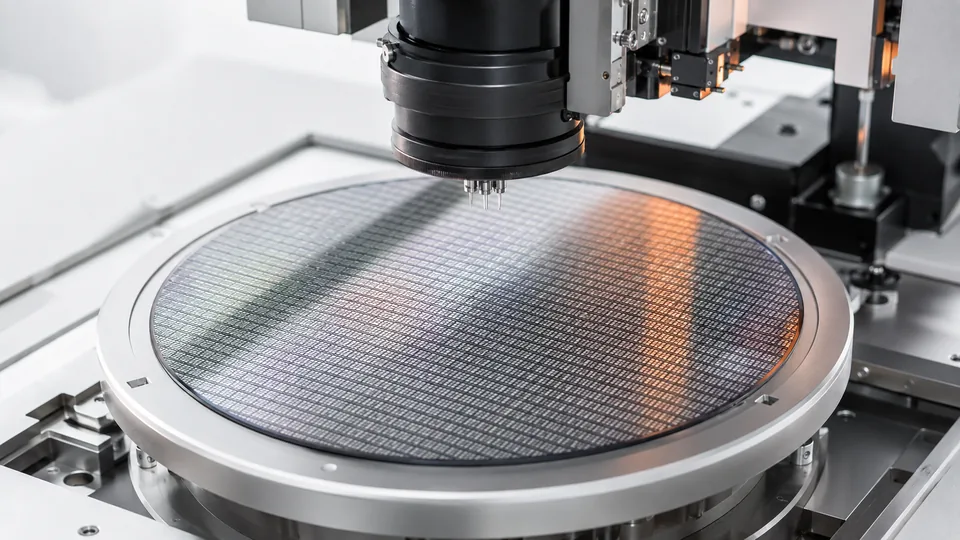 How to Choose an Edge LLM Inference Chip: 7 QuestionsChoosing an edge LLM inference chip comes down to model fit, power budget and how the model updates, not peak TOPS. Seven questions to answer, plus a checklist.
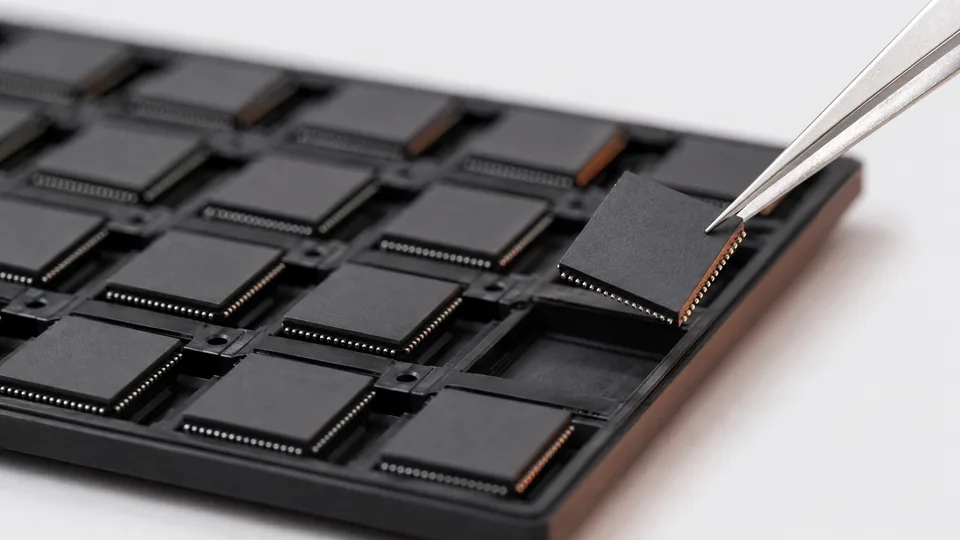 LLM Inference Cost: API vs Cloud GPU vs Edge Chip Over 3 YearsCount LLM inference cost over three years: an API per token, a cloud GPU per hour, or an edge chip bought once. Methods, a worked example and payback.
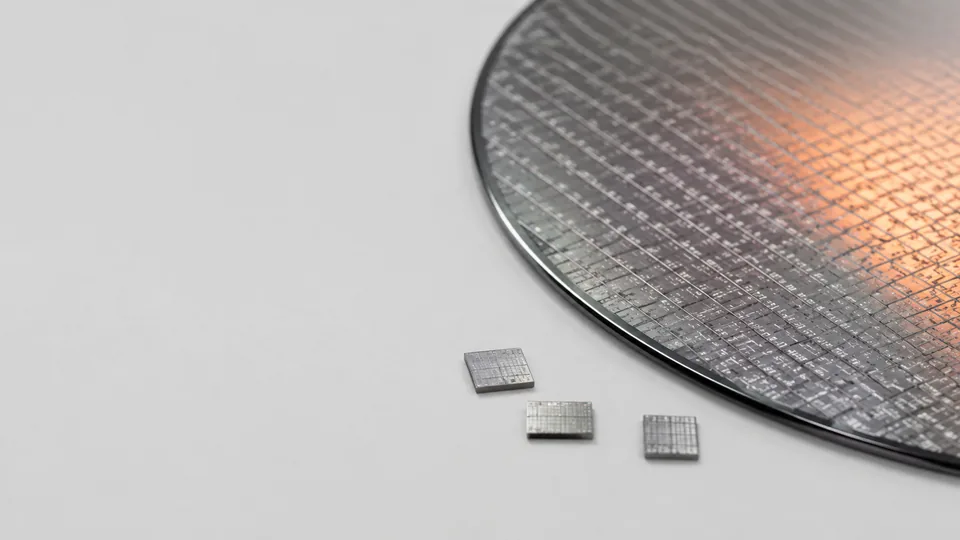 The Memory Wall: Why Edge LLMs Stall and How to Get Around ItLLM decoding is bandwidth-bound: every token reads all the weights, and edge devices cannot sustain that traffic. How high the wall is and how to get past it.
Describe your model, device and volume in two minutes, and we will reply about your project specifically.